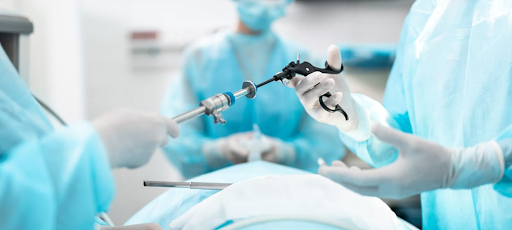
Inside the Hidden Supply Chain That Makes Medical Devices Safe
Frequently asked questions
Why is traceability important in medical devices?
Traceability helps manufacturers investigate issues, control changes, and document how a component was made.
What is a medical-device quality system?
It is the documented process framework a manufacturer uses to control design, production, records, and corrective action.
Somewhere inside a surgical instrument used during a spinal procedure is a small plastic component almost no one will ever see. Somewhere inside the machine that verifies whether a knee replacement was ground to specification is a metal sphere polished to a tolerance measured in fractions of a human hair. These parts never make trade headlines. Yet they sit at the exact point where industrial manufacturing meets human biology, and where a rounding error stops being a rounding error and becomes a question of whether a patient goes home healthy.
Key takeaways
- Medical parts share molding physics with everyday plastics but carry vastly heavier documentation and inspection obligations.
- Suppliers must prove material traceability, cleanroom control, First Article Inspection, and formal change-control paperwork.
- ISO 13485 governs medical quality globally, while EU MDR 2017/745 adds separate European requirements manufacturers must meet.
- Buyers care less about a supplier’s failure rate than how disciplined its documented response to a non-conformance is.
- The global medical device market was roughly $512 billion in 2024 and is projected near $800 billion by 2030.
This is the quiet, unglamorous layer of the economy that most of us only think about when it fails. It is worth understanding on its own terms, because it illustrates a broader truth about how advanced societies manage risk: the further a product’s failure reaches into human life, the more invisible machinery of documentation, verification, and accountability we build behind it.
Why a Medical Part Is Not Just a Part
Injection molding — forcing molten material into a mold to form a component — is one of the most common manufacturing processes on earth. The keycaps on your laptop, the cap on a shampoo bottle, and a housing inside a pacemaker can all be born from the same basic physics. That shared mechanism is exactly where the comparison ends.
A component destined for a medical device carries obligations that ordinary industrial production simply does not. The molded shape may look identical; the paperwork, the environment, and the burden of proof surrounding it are of a different world entirely. Suppliers working at this tier typically must satisfy a set of requirements that consumers never see:
- Material traceability: Every batch of raw resin must be documented and traceable back to its source, so that if a problem surfaces years later, the exact lineage of the material can be reconstructed.
- Cleanroom production: Many components must be made in tightly controlled environments where airborne particles, temperature, and humidity are regulated to prevent contamination.
- First Article Inspection: Before a new part goes into production, the manufacturer must formally prove that the process reliably produces parts within specification — not once, but consistently.
- Change control: Even a minor tweak to the process often requires formal documentation and, in many cases, the customer’s written sign-off before it can be implemented.
Underneath these practices sits a regulatory architecture. In the United States, the Food and Drug Administration sorts medical devices into three classes according to risk. Class III devices — implants and life-sustaining equipment — face the most demanding pre-market scrutiny, and the suppliers who feed them operate under the FDA’s quality system regulations, typically holding ISO 13485 certification, the international standard for medical device quality management. Cross the Atlantic and the picture shifts again: the European Union’s Medical Device Regulation (MDR 2017/745) sets its own requirements, which differ from the American rules in ways that matter. A manufacturer operating across the U.S., the U.K., and continental Europe has to hold all of these standards true at once, in every facility, regardless of which flag flies outside.
Trust as an Engineered Product
Step back and something interesting comes into view. All of this machinery — the lot numbers, the audits, the sign-offs — is really a technology for manufacturing trust. A hospital cannot personally inspect the molecular purity of a resin. A surgeon cannot verify the roundness of a calibration sphere by eye. So the system substitutes documentation and independent verification for direct knowledge, allowing strangers separated by oceans and supply tiers to rely on one another.
This is not new. It is the same problem that medieval guilds solved with maker’s marks, that goldsmiths solved with hallmarks, and that modern finance solves with audits. As economies grow more specialized, the distance between the person who makes a thing and the person who depends on it stretches ever wider. The paperwork that feels like bureaucratic friction is, in fact, the connective tissue that lets a specialized economy function at all. In medicine, where the stakes are a human body, that tissue simply grows thicker.
The Skill the Work Actually Demands
Running a business at this level exposes an interesting gap in how we think about expertise. The technical depth required is real — you cannot lead a precision-manufacturing operation without speaking the language of quality engineers, production supervisors, and metrology specialists. But deep engineering skill alone is often not what determines who succeeds.
The harder challenge lives in the space between reading a technical drawing and steering a multi-site organization under regulatory scrutiny across different currencies, cultures, and legal regimes. It calls for someone fluent in both micron-level precision and the coarser arithmetic of a profit-and-loss statement — able to hold a conversation about dimensional tolerances in the morning and about capital allocation in the afternoon.
Nashay Naeve, an executive who leads an engineered-plastics business unit spanning the U.S., the U.K., and Europe, offers one illustration of the range the field rewards. Her path ran from a mechanical engineering degree, through a master’s in automotive engineering completed in Mandarin, to an MBA — a deliberate accumulation of both technical and managerial fluency. “Medical device customers require a different kind of relationship,” she has observed. “They need suppliers who understand not just how to mold a part, but why that part’s dimensions matter at the micron level.” Her career is one data point, but it points at a pattern: the people best positioned to lead here tend to be bilingual in the dialects of the workshop and the boardroom.
How These Relationships Are Actually Built
One consequence of all this is that buying a medical component looks nothing like buying an ordinary industrial part. The courtship between an original equipment manufacturer and a new supplier is long and deliberate by design — extended qualification periods, on-site audits, and technical reviews all precede a single production run.
Revealingly, buyers often care less about a supplier’s failure rate than about how it responds to failure. A documented, disciplined reaction to a non-conformance can inspire more confidence than a spotless but unexplained record, because it demonstrates the one thing the whole system runs on: accountability that holds up under inspection. Buyers also probe resilience — can production shift between facilities without any loss of dimensional accuracy or documentation integrity?
There is a neat piece of recursion buried in this world. The precision spheres described earlier are reference components inside coordinate measuring machines, the very instruments used to verify that tight-tolerance medical parts meet spec. The quality of the sphere shapes the accuracy of the machine, which shapes the verification of the part, which shapes the performance of the device inside a patient. Precision, it turns out, is not a single checkpoint but a chain — and a chain is only as trustworthy as its most overlooked link.
The Bottom Line
The global medical device market was valued at roughly $512 billion in 2024 and is projected to approach $800 billion by 2030. Growth on that scale pushes demand down every tier of the supply chain, and with it comes a double squeeze: more volume, and simultaneously tighter traceability rules and faster qualification timelines. The pressure is not only to make more, but to prove more, faster.
What makes this small corner of manufacturing worth a moment of attention is what it teaches about the world beyond it. Behind every product we trust with something important — our health, our safety, our lives — sits an unseen infrastructure of standards, verification, and human accountability, built up over centuries and still being refined. We rarely notice it, which is precisely the sign that it is working. The plastic component inside the surgical instrument does its job in silence. So, ideally, does the vast apparatus that guarantees it was made right.
Frequently asked questions
What is ISO 13485 and why do medical-device suppliers need it?
ISO 13485 is the international standard for medical device quality management systems, and it is the certification most suppliers feeding regulated devices are expected to hold. It formalizes how a manufacturer documents processes, controls change, and proves consistency — the paperwork layer that lets a hospital or original equipment manufacturer trust a component it cannot personally inspect at the molecular level.
How is a medical-grade injection-molded part different from a regular plastic part?
Physically the molding process can be nearly identical — the same molten material pushed into a mold. The difference lives in the paperwork and environment. Medical-grade production layers on material traceability back to each resin batch, cleanroom conditions that control particles and humidity, First Article Inspection that formally proves the process yields parts within specification, and change control that requires customer sign-off on adjustments.
Why does the FDA divide medical devices into three classes?
The Food and Drug Administration sorts medical devices into three classes according to the risk they pose. Class III devices — implants and life-sustaining equipment — face the most demanding pre-market scrutiny because a failure directly threatens a patient. Suppliers who feed those devices operate under the FDA’s quality system regulations. This tiered structure concentrates the heaviest oversight on the products where a failure is least tolerable.
How do medical-device manufacturers manage suppliers across the U.S., U.K., and EU?
Every facility has to hold multiple regulatory frameworks true at once, regardless of which flag flies outside. American FDA quality system rules, ISO 13485, and the European Union’s Medical Device Regulation (MDR 2017/745) each carry different requirements that matter, and a multi-site operation must satisfy all of them simultaneously — with the discipline to shift production between facilities without losing dimensional accuracy or documentation integrity.
What do medical-device buyers actually look for in a supplier?
Buyers care less about a spotless failure record than about how a supplier responds when something goes wrong. A documented, disciplined reaction to a non-conformance inspires more confidence than an unexplained clean record, because it proves the accountability the whole system runs on. Buyers also probe resilience — whether production can shift between facilities without any loss of dimensional accuracy or documentation integrity.
Sources & further reading
Read us often? Make Business News Life a preferred source in Google Search and see our reporting more often in Top Stories.


