What Women-Led Businesses Reveal About the Next Economy
Frequently asked questions
What can business readers learn from founder profiles?
The useful lesson is the specific customer, operating model, constraint, and decision behind the outcome.
Where can readers find data on business ownership?
The Census Annual Business Survey provides data on business ownership and characteristics.
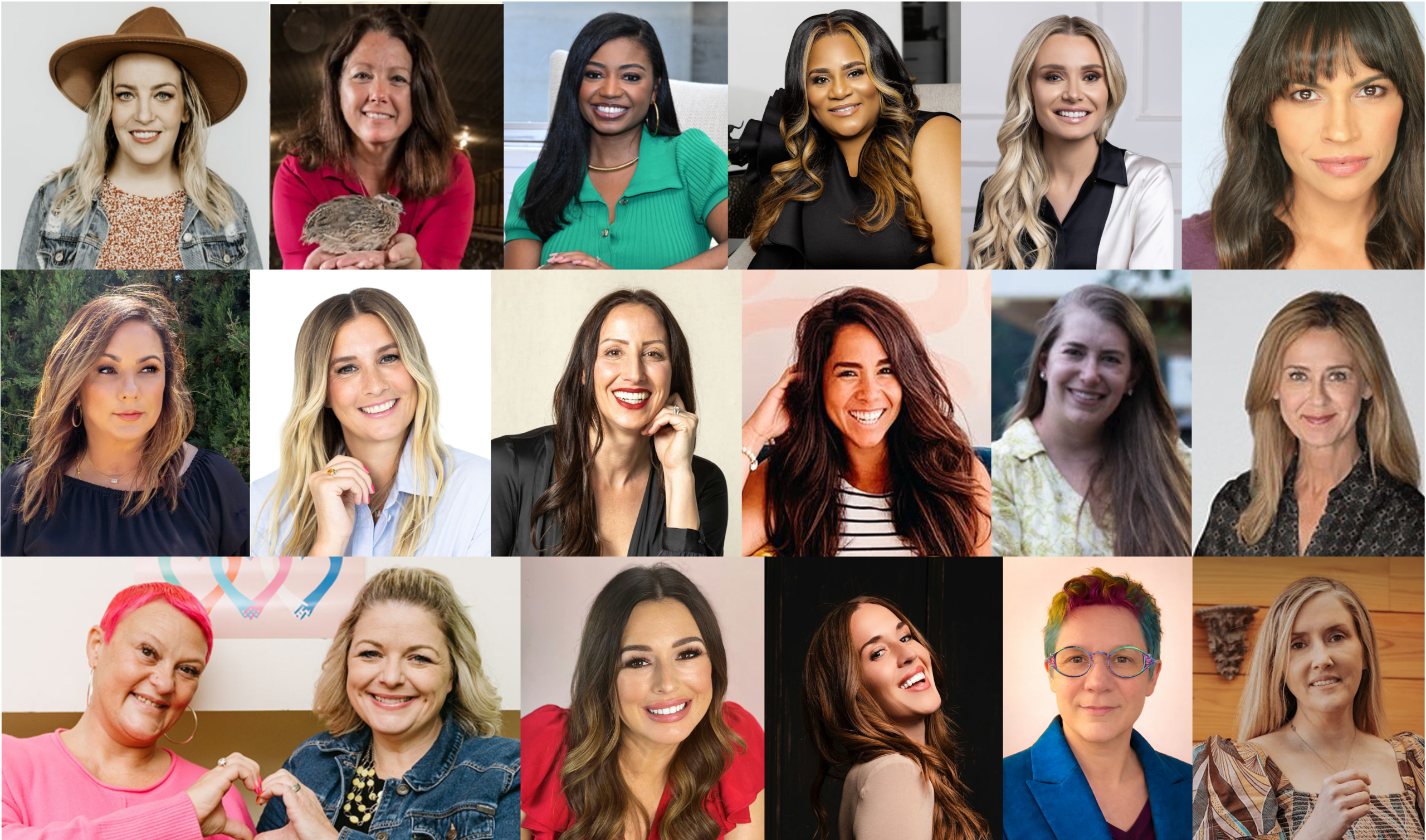
Consider the quail farm. Not the obvious place to start a conversation about the future of the economy, yet Manchester Farms in South Carolina—the oldest and largest quail operation in the United States, run for over forty years without hormones or antibiotics and now led by a second-generation owner, Brittney Miller—tells you something a stock ticker cannot. It tells you that certain businesses measure success not only in quarterly growth but in continuity: the integrity of a supply chain, the trust of a family that has bought from you for decades, the health of the land you will hand to whoever comes next. That is a distinctly long-horizon way to run an enterprise, and when you scan the landscape of businesses being built and led by women today, you find that horizon appearing again and again.
Key takeaways
- Manchester Farms’ hormone-free quail operation shows transparency has become a source of competitive value.
- Circular Club rotates baby clothing between families, replacing the short buy-wear-discard cycle with reuse.
- Deux Mains pays living wages in Haiti to make ethical sourcing a mark of craftsmanship.
- Dr. Tamara Nall frames AI governance around serving humanity, not just corporate bottom lines.
- Media equity work by Rhonesha Byng argues whoever controls the narrative eventually controls the market.
This is worth examining not as a matter of sentiment but as economic observation. Over the past half-century, women have moved from the margins of formal enterprise to founding, financing, and steering companies across every sector. What is interesting is less the fact of their presence than the pattern of what they tend to build. Look closely and you see a recurring set of instincts—toward transparency, toward durability, toward putting people at the center of systems that had drifted toward abstraction. Those instincts are not exclusive to women, of course. But they are showing up with enough consistency in women-led ventures that they are worth naming as a genuine current in modern business.
Transparency as a Business Model, Not a Slogan
For most of the industrial era, opacity was a competitive advantage. The consumer did not know how the sausage was made—literally—and companies preferred it that way. What is shifting now is that transparency itself has become a source of value. Manchester Farms builds its reputation on exactly the practices a previous generation of producers might have hidden: no hormones, no antibiotics, a traceable and stable way of raising animals. In ethical fashion, Julie Colombino-Billingham founded Deux Mains out of earthquake-relief work in Haiti and turned it into a solar-powered factory paying living wages, with the deliberate aim of making “Made in Haiti” a mark of craftsmanship rather than a byword for cheap labor. The business case rests on the customer being able to see all the way down the chain.
This is a reversal of an old logic. When a brand invites you to inspect its factory floor, its wage structure, its energy source, it is betting that scrutiny will build loyalty rather than erode margins. That bet only pays off in a culture that has learned to distrust the glossy surface and reward the verifiable claim—and that culture is, increasingly, the one we live in. Founders who treat transparency as the product rather than the disclaimer are reading the moment correctly.
The Circular Instinct
Economists have a tidy phrase for the dominant twentieth-century consumption model: “take, make, waste.” You extract a resource, manufacture a good, use it briefly, discard it. It was enormously productive and, we now understand, enormously wasteful. The alternative—variously called the circular economy—asks whether the same material can serve many times before it becomes garbage.
You can see this idea being tested in ordinary corners of commerce. Vale Siegrist built Circular Club, a membership model that rotates quality baby and toddler clothing across families instead of letting each garment run the short buy-wear-discard cycle that children’s clothing is notorious for. Colleen Bennett, a designer who once served as a head visual merchandiser for Ralph Lauren Home, founded a side venture that upcycles furniture scraps into handbags to support local women’s charities. These are small operations, but they matter precisely because they are small: they demonstrate that circularity is not only a mandate for industrial giants but a workable premise for a founder with a laptop and a warehouse. When the waste stream becomes the raw material, the whole shape of a business changes.
Technology in the Service of People
Every era’s frontier technology arrives with the same question attached: will this serve people, or will people end up serving it? Artificial intelligence is the current version of that question, and some of the more thoughtful attempts to answer it are coming from women who insist the tool remain accountable to human ends. Dr. Tamara Nall, who works at the intersection of AI and machine learning for governmental and corporate problems, frames her mission as ensuring “that data serves humanity rather than just bottom lines”—a governance-first posture toward a technology that is often deployed governance-last. In a different corner, Colleen Joyce has worked to bring AI-driven matching to the traditionally rigid legal industry, on the premise that navigating the law should be a pathway to resolution rather than a source of fear.
The through-line is not techno-optimism or techno-panic but something more useful: a demand that technology justify itself in human terms. That framing has a long lineage. Every durable improvement in how we live—from the printing press to the shipping container—eventually had to be domesticated, bent toward broad human benefit rather than narrow extraction. The people doing that bending are rarely the ones who built the raw machinery; they are the ones who ask what it is for. Applied to AI, that is not a soft question. It may be the decisive one.
Culture, Narrative, and Who Gets to Tell the Story
Markets are not only made of goods and prices. They are made of stories—about what is desirable, who belongs, what counts as success. Some of the work here is explicitly cultural. Rhonesha Byng, an Emmy Award-winning journalist, has focused on media equity and on building sustainable pipelines for diverse storytellers, on the theory that who controls the narrative eventually shapes who controls the market. Maya Lilly, a climate storyteller, works to translate dense environmental data into human stories, shifting the climate conversation from despair toward action.
This matters economically because narrative precedes demand. Before a “better-for-you” snack can sell, someone has to make whole-food nutrition feel exciting rather than dutiful. Before neurodivergent learners or collectors or hobbyists can be served as a market, someone has to insist they exist as one. A striking number of women founders are working at that upstream layer—reshaping the story so that a previously invisible customer, employee, or community becomes visible, and therefore serviceable, and therefore economically real.
The Bottom Line
It would be a mistake to romanticize any of this. Purpose-driven branding can be as hollow as any other kind, and the fact that a company is led by a woman guarantees nothing about how it treats its workers, its suppliers, or its books. The point is not that women lead more virtuously. The point is that a large and growing cohort of women-led enterprises is converging, from many directions at once, on a particular thesis about where value comes from: that transparency beats opacity, that durability beats disposability, that technology should answer to people, and that the story a market tells about itself is part of the market’s infrastructure.
What makes this more than a feel-good observation is that the wider economy appears to be arriving at the same conclusions—slowly, unevenly, but unmistakably. Consumers increasingly reward verifiable claims. Regulators increasingly demand traceable supply chains. Employees increasingly ask what a company is for before they commit their working lives to it. Seen in that light, the founders profiled here are not outliers pushing against the current. They are, in many cases, ahead of it—running quail farms and clothing clubs and AI-governance firms as if the future they expect has already arrived. The most useful thing you can do with that observation is to treat it as a forecast. When you want to know where an economy is heading, watch the people building as though the destination is already here.
Frequently asked questions
What are women-led businesses building differently right now?
Across sectors, women-led ventures share a recurring set of instincts: transparency in supply chains and wages, durable long-horizon planning, circular reuse of materials, human-accountable technology, and cultural narratives that widen who tells the story. The pattern is not universal to women alone, but it appears consistently enough in these companies to name as a distinct current in modern business.
Why is transparency now treated as a competitive advantage?
For most of the industrial era, opacity kept consumers in the dark and protected margins. That has flipped. Customers now reward brands that let them inspect the factory floor, wage structure, and energy source. Manchester Farms builds trust on practices previous producers hid, and Deux Mains’ solar-powered Haiti factory does the same. In a culture that distrusts glossy surfaces, verifiable claims become the product itself.
How does the circular economy show up in these companies?
The circular economy asks whether the same material can serve many uses before becoming waste. Vale Siegrist’s Circular Club runs a membership model that rotates children’s clothing between families rather than letting each garment run the usual short buy-wear-discard cycle. Colleen Bennett upcycles furniture scraps into handbags that fund women’s charities. Small operations like these prove circularity works for a founder with a laptop, not only for industrial giants.
How are women-led ventures approaching AI differently?
The thread running through these AI ventures is a demand that technology justify itself in human terms. Dr. Tamara Nall works on AI and machine learning for government and corporate problems and frames her mission as ensuring data serves humanity rather than only bottom lines. Colleen Joyce brings AI-driven matching to the legal industry so navigating law becomes a path to resolution instead of fear. Governance-first, not governance-last.
Does storytelling really shape which markets grow?
Markets are made of stories about what is desirable, who belongs, and what counts as success. Rhonesha Byng, an Emmy Award-winning journalist, focuses on media equity and building sustainable pipelines for diverse storytellers on the theory that whoever controls the narrative eventually shapes who controls the market. Maya Lilly’s work as a climate storyteller sits in the same current—narrative as an economic force.
Sources & further reading
Read us often? Make Business News Life a preferred source in Google Search and see our reporting more often in Top Stories.